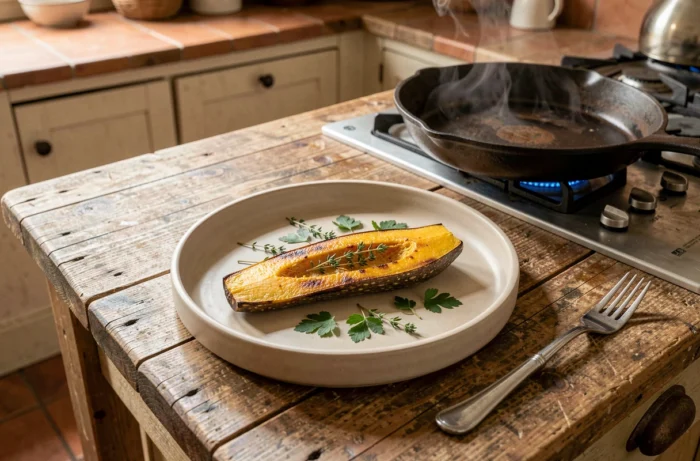
When you come home late and there’s a long squash from Nice sitting on the countertop, the temptation is strong to shove it in the oven for an hour. The problem is the time. In a pan, this dense-fleshed vegetable turns into a main dish in about twenty minutes, provided you master two or three technical points that most gratin recipes do not mention.
Why the long squash from Nice sticks or releases water in the pan
You load the pan, turn up the heat, and after three minutes the squash is swimming in its juice. This scenario almost systematically occurs when you treat this vegetable like sautéed potatoes.
The long squash from Nice contains a lot of water. As soon as it heats up, this water escapes. If the pieces are piled up, the steam gets trapped between them and the cooking switches from searing to steaming. You end up with a soft, pale texture with no browning.
Salt exacerbates the phenomenon. Added too early, it accelerates the release of water through osmosis. It’s better to salt at the very end of cooking or at the plating stage. If the squash seems wet on the surface after cutting, pat it dry with a clean cloth before placing it in the pan.
We work on this recipe for long squash from Nice in the pan with a logic of small batches rather than one large load, which radically changes the result.
Quick cutting and cooking of the long squash from Nice in the pan
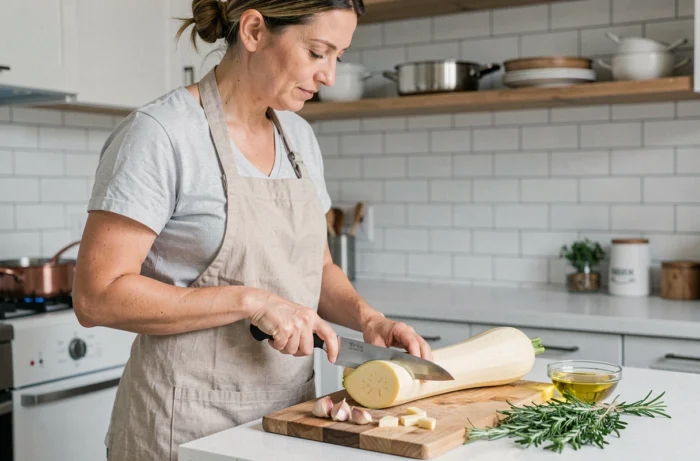
The cutting determines everything else. Slices that are too thick remain raw in the center while the outside burns. Large cubes take too long to cook for a quick format.
The right thickness for quick searing
Slices half a centimeter to one centimeter thick offer the best compromise. You can also cut half-moons if the section is wide. The goal: maximize the surface area in contact with the pan to achieve a golden crust.
The batch method
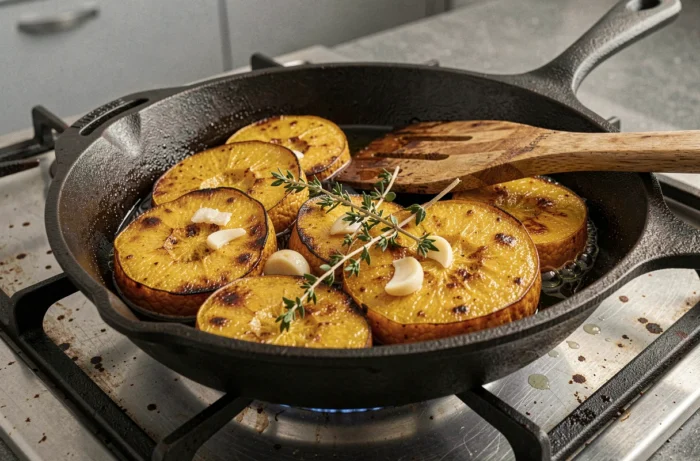
Heat the olive oil over high heat. The pieces of squash should fit in a single layer, without overlapping. In practice, this means two or three batches for a whole squash, but each batch only takes a few minutes per side.
Turn them only once, when the bottom is nicely golden. No nervous spatula flipping every thirty seconds: each handling releases steam and prevents the Maillard reaction.
- Well-heated, almost smoking olive oil before placing the first slice
- A single layer of pieces, with visible space between each piece
- Single turn after good browning, then immediate transfer to a dish
- Salt and pepper added off the heat, on the already cooked slices
Keep each batch warm in a dish in the oven (minimum thermostat) while searing the next one. The total cooking time is about fifteen minutes.
Mediterranean finishes for a complete dinner with squash
The long squash from Nice has a slightly sweet flesh that calls for bold flavors. Competitors often offer side dishes (gratin, soups), but rarely a standalone dinner assembly with proteins. We’ll fix that.
The garlic, herbs, and cheese axis
Once the slices are seared, lower the heat and toss minced garlic with fresh thyme or basil into the still-hot pan. The garlic only cooks for thirty seconds in the residual fat, just enough to release its fragrance without burning.
Place the squash slices back on top, sprinkle with grated parmesan or crumbled fresh goat cheese, and cover for a minute. The cheese melts in the residual heat, without an oven or salamander.
Add a protein without complicating the meal
A fried egg cooked in the same pan after the last batch of squash turns the side dish into a complete dish. The runny yolk acts as a sauce. You can also sauté slices of halloumi or smoked bacon alongside.
The dinner fits in a single pan and wraps up in twenty minutes, including washing the main utensil.
Common mistakes that ruin sautéed long squash from Nice
Some habits inherited from cooking classic zucchinis do not work with long squash from Nice. Its flesh is denser, sweeter, and reacts differently to heat.
- Always peeling: the thin skin of young specimens is edible and helps the slices keep their shape in the pan. For a mature squash with thick skin, peel it.
- Using only butter: it burns before the squash has time to brown. A mixture of olive oil and butter added at the end of cooking works better.
- Covering the pan during searing: the trapped steam cancels out all the browning work. Only cover when melting the cheese, with the heat off.
Opinions vary on the usefulness of lightly flouring the slices before cooking. On a squash that is well-dried on the surface, flour doesn’t add much. On a very watery squash (harvested after heavy rains), a dusting of flour can help absorb surface moisture and promote crispiness.
Quick variations based on what you have in the pantry
The sautéed base allows for very different directions without extending preparation time.
A drizzle of honey added off the heat with some toasted pine nuts pushes the squash into a sweet-savory register that works well in autumn. Rosemary then advantageously replaces basil for a more woody note.
On the spice side, cumin or Espelette pepper sprinkled on the warm slices creates a spicier profile. Serve with plain Greek yogurt to temper, and the dinner takes on a vibe close to an improvised mezze.
With short pasta cooked in parallel, the sautéed squash cubes become a textured sauce: deglaze the pan with a bit of pasta cooking water, mix everything with parmesan and black pepper. A vegetarian carbonara-style dish, ready before the table is set.