San Marina has gone through several lives since its creation in the 1980s. A French brand positioned in the mid-range urban segment, it experienced judicial liquidation before being taken over by the Chaussea group. This change of ownership has altered the distribution, after-sales service, and pricing strategy of the brand, although these changes are not always clear to buyers.
San Marina after the takeover by Chaussea: what has changed for the buyer
The takeover by Chaussea has reshuffled the cards. Most dedicated San Marina stores have closed, and the brand is now distributed within the Chaussea network, in multi-brand stores with a fast turnover of collections.
The after-sales service follows Chaussea’s general sales conditions, not the former San Marina policies. For exchanges, refunds, or defect tracking, the Chaussea framework applies. Customer reviews published before this transition do not reflect the current experience.
Several buyers, particularly on certified review platforms, mention their satisfaction with the quality of the products while regretting the closure of dedicated stores. This gap between the brand’s perception and the reality of its distribution deserves to be taken into account before any purchase.
To consult a detailed review of San Marina shoes, it is important to distinguish feedback prior to the takeover from those concerning the current period, as the experience differs significantly.

Price positioning of San Marina shoes: mid-range or entry-level
Before the bankruptcy, San Marina occupied a mid-range urban niche, with relatively stable prices and few aggressive sales outside of regulated periods. The model relied on stores with a strong identity and a loyal customer base.
Since joining the Chaussea network, the positioning has shifted towards accessible mid-range with frequent promotions. Collections turn over more quickly, commercial operations are more regular, and the average price of a pair tends to decrease compared to the era of independent stores.
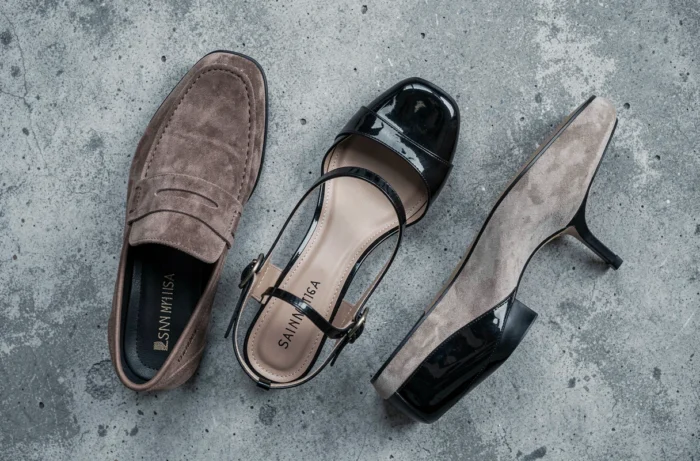
This repositioning has a direct effect on the types of products available. Full-grain leather lines, once quite present in the collections, now coexist with more models in synthetic materials or reconstituted leather. The quality-price ratio remains acceptable on certain references, but the range is no longer homogeneous.
Concrete criteria for choosing a pair of San Marina
With the current offering being more heterogeneous than before, choosing a pair requires a minimum of attention to a few specific points.
- Check the composition on the label: the mention “genuine leather” on the upper does not guarantee that the insole or lining is also. Turning the shoe over and reading all the pictograms helps avoid disappointments.
- Test comfort in-store rather than online: feedback varies on sizing depending on the models. Some pumps fit true to size, while ankle boots are sometimes described as slightly large. Trying them on remains the most reliable method.
- Compare with competing brands available at Chaussea: in the same store, other brands occupy a similar niche. Comparing finishes at equivalent prices allows you to check if the San Marina pair truly offers an advantage.
- Consult Chaussea’s return policy before purchasing online: the timelines and conditions may differ from what a former San Marina customer was used to.
Durability and wear: what feedback says after several months
The most useful reviews on San Marina are not those published upon receipt of the package, but those written after several months of use. On certified review platforms, a trend emerges: initial satisfaction is high, but feedback on longevity is more nuanced.
Several users report that leather models age well, provided they receive minimal maintenance (nourishing cream, waterproofing). However, glued sole models, common in the lower-priced ranges, sometimes show signs of detachment after a few months of daily wear.
Recent collections, distributed under Chaussea’s aegis, have not yet received a sufficient volume of long-term feedback to draw definitive conclusions. The available data does not allow for a determination of any potential decline in quality related to the change of ownership, although this question frequently arises in forums.
San Marina second-hand: an option to consider
The second-hand market has absorbed part of the old San Marina stock. Pairs can be found on platforms like Label Emmaüs, Vinted, or in specialized thrift stores. Models from before the takeover, often in genuine leather, resell well and provide access to the brand’s historical quality at a reduced price.
The condition of the sole and the flexibility of the leather are the two most reliable indicators for evaluating a second-hand pair. Rigid and cracked leather indicates a lack of maintenance that will be difficult to remedy.
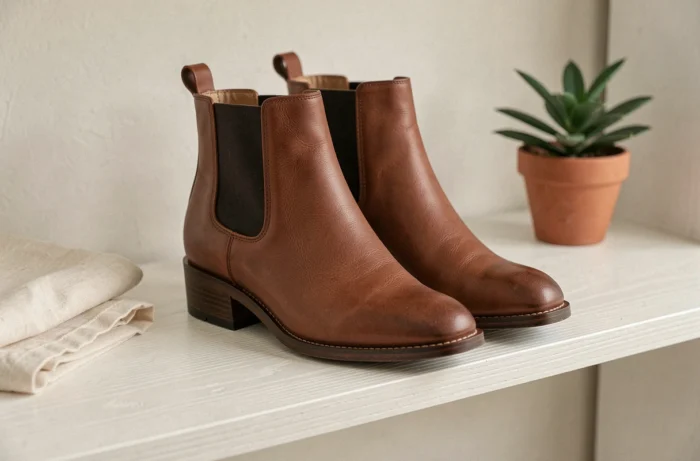
The choice between new and second-hand thus depends on the targeted model. For classic lines (loafers, smooth leather ankle boots), second-hand sometimes offers a better quality-price ratio than current collections. For trendy models with a limited lifespan, new items on promotion remain relevant.
San Marina retains a strong brand equity despite the upheavals of recent years. The informed buyer simply needs to adjust their expectations to the new distribution framework and take the time to check the materials before making a decision.