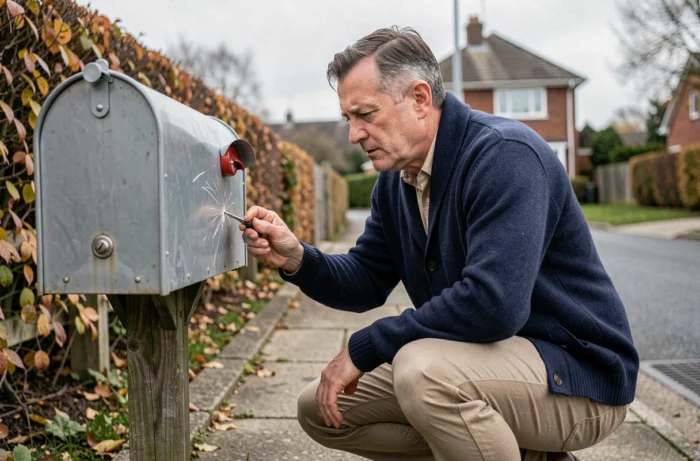
A stone placed near your mailbox, a white sheet sticking out from the flap, a pencil mark on the post: these details often go unnoticed. Most guides on burglary signs list symbols without explaining how to distinguish them from mere coincidence.
A pebble fallen from the sidewalk has nothing to do with a stone intentionally placed against your gate. Understanding this difference changes how you react, and sometimes prevents a false alarm or, worse, an actual unnoticed break-in.
Stone, white sheet, pencil mark: when should you really be concerned
Have you ever noticed a small unusual object in front of your house without paying attention? That’s normal. The difficulty is that an isolated object proves nothing. A stone in front of a gate could come from a child, a neighbor’s sweeping, or the passage of a vehicle.
What should alert you is the combination of several signs over a short period. A stone placed on a Tuesday, a pencil mark discovered on Thursday, and a mailbox left open when you were expecting nothing: this sequence tells a different story than mere coincidence.
Security diagnostic specialists remind us that objects in front of a door mean nothing on their own. Decoding burglary signs on a mailbox requires looking at the overall context: have there been repeated passersby in the street? Is your mail visibly piling up? Have the shutters been closed for several days in a row?
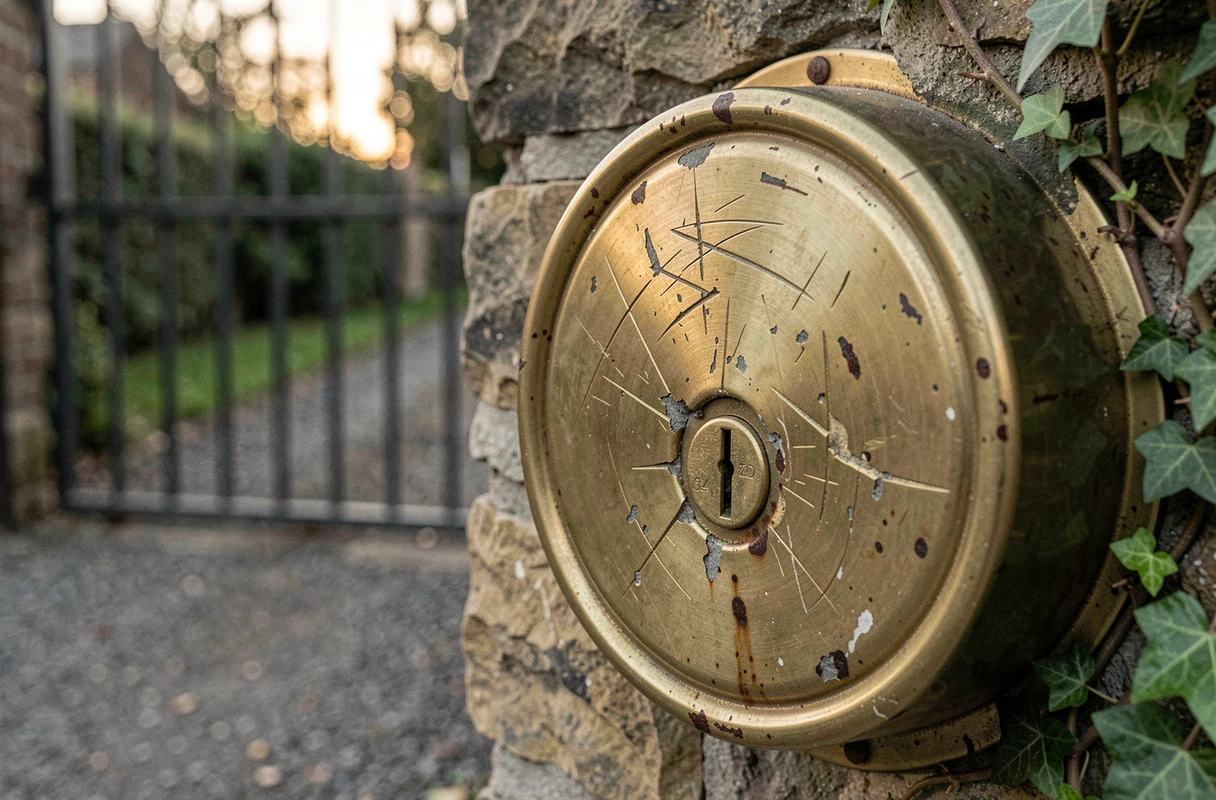
A symbol engraved on a mailbox (cross, diamond, triangle) deserves attention only if you notice suspicious behavior in the neighborhood at the same time. Taken in isolation, a pencil mark remains just a pencil mark.
Burglary spotting signs: distinguishing a real signal from an innocuous object
Most content on the subject lists symbols with their supposed meanings. A cross supposedly means “interesting target,” a diamond “empty house.” These codes exist, but they circulate so widely on social media that many burglars have abandoned them in favor of less conspicuous methods.
Current spotting techniques are often more mundane and harder to detect. Here are concrete signals that justify increased vigilance:
- An object moved or added that no one claims: stone, piece of tape on the lock, flyer stuck in the door. If the object is still there after 24 hours, it may indicate that no one has entered or exited the home.
- A mailbox overflowing with mail: this is one of the most reliable indicators of a prolonged absence. Burglars don’t even need to mark anything.
- Shutters permanently closed, combined with lights off for several consecutive nights: this duo signals an empty house much more clearly than an engraved symbol.
- A package left on the doorstep for more than a day: it visually confirms that no one is watching the entrance.
In other words, true spotting relies less on graphic codes than on observing your habits. A burglar passing by your house twice at different times learns more than a symbol on your mailbox.
Documenting a suspicious sign without compromising evidence
The first reflex when you spot a mark or suspicious object is not to remove it. Several recent police sources recommend a simple three-step protocol.
Photograph the mark or object without touching or moving it. Take the picture with enough context: the entire mailbox, the gate, the immediate environment. A cropped photo of a stone without spatial reference helps no one.
Note the date, time, and conditions (was the stone there this morning? Did you see anyone in the street?). These details allow law enforcement to cross-reference with any reports from the neighborhood.
Only then, if the situation seems suspicious, contact the police or gendarmerie. Even without certainty, a report feeds into a local database. If three neighbors in the same area report similar marks in the same week, cross-referencing can identify organized spotting.
Mailbox and home protection: measures that really make a difference
Installing a surveillance camera or alarm remains the most commonly cited response, and it works. But before investing in a security system, some free habits significantly reduce risk.
Having a neighbor or friend collect your mail during an absence is the simplest and most effective measure. An empty mailbox every day gives the appearance of an occupied home. Some post offices also offer a mail hold service, useful for extended vacations.
Simulating a complete presence complicates the setup. Program indoor lighting with a timer, vary the opening and closing of shutters, leave a radio on: these simple gestures make it harder for a potential spotter to observe.
- Regularly check your mailbox and entrance, even if you are home. An object placed on a Monday and still present on Wednesday gives you information.
- Talk to your neighbors about unusual behaviors. Collective surveillance remains the most deterrent barrier for a burglar in the spotting phase.
- Avoid posting your vacation dates on social media. Burglars gather information about prolonged absences there.
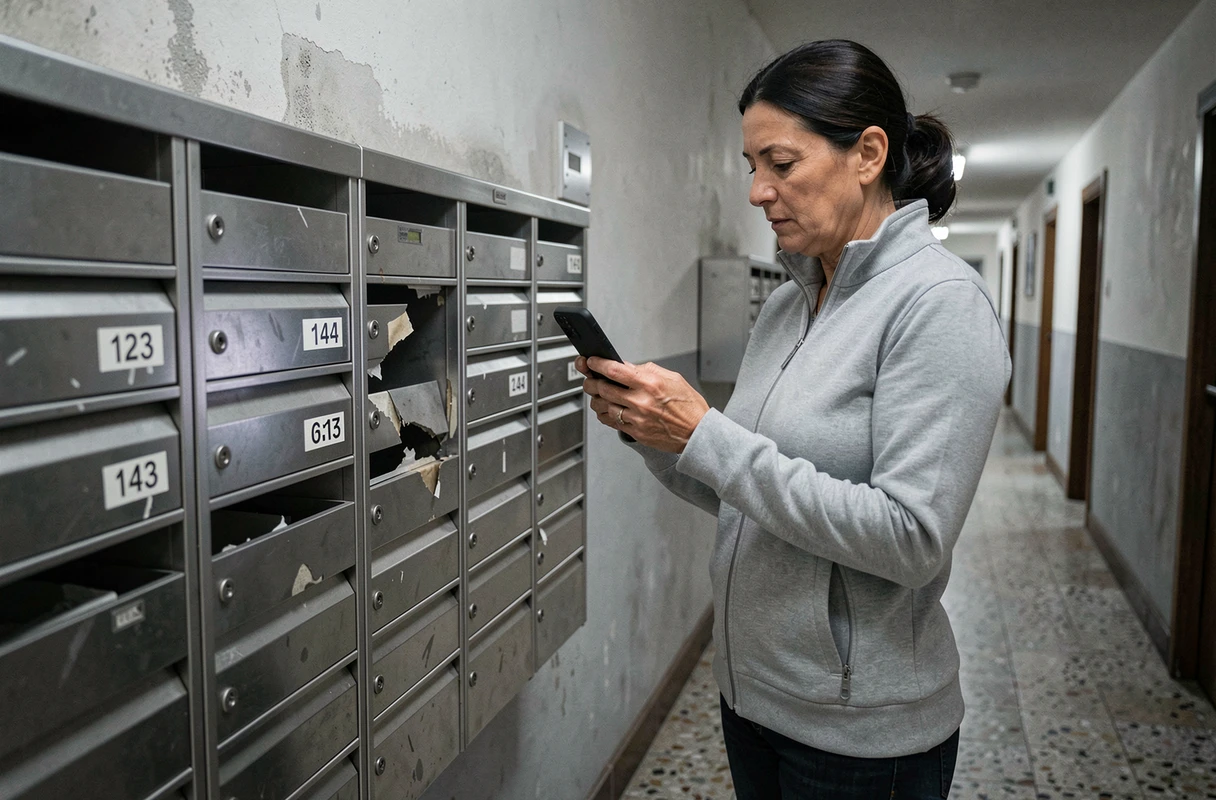
The security of a home does not rely on the ability to decode a mysterious symbol, but on the attention paid to changes in your daily environment. An object that doesn’t belong, a neighbor reporting suspicious activity, a mailbox that is carefully emptied every day: these ordinary details form the first line of defense against burglary, well before any alarm or reinforced lock.