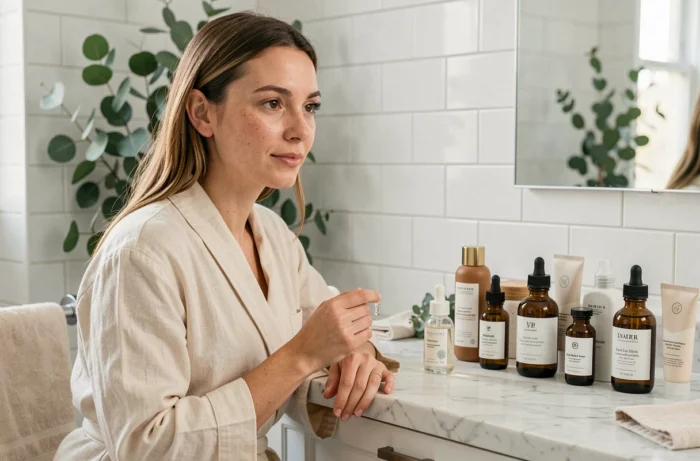
Your favorite moisturizer may have changed its formula three times since its creation without you noticing. Cosmetics and beauty care evolve at a pace dictated by dermatological research, consumer expectations, and, recently, by a new tension between scientific evidence and sensory experience. Understanding these movements helps make more relevant routine choices for your skin.
Scientific evidence versus emotion: what shapes the cosmetics market in 2026
Several analyses of the cosmetics market published this year describe a clear polarization. On one side, brands are betting on clinically proven promises: in vivo tests, displayed active ingredient percentages, protocols validated by dermatologists. On the other side, a wave of products plays on sensory experience, surprising textures, and enveloping scents.
This opposition is not anecdotal. It changes the way you read a label. A serum that highlights a precisely dosed peptide does not address the same need as a scented oil designed to transform the evening routine into a soothing ritual. Both approaches coexist, but they do not fulfill the same promise.
To navigate between these two poles, resources like cosmetiques-beaute.net allow you to cross-reference information on active ingredients and user feedback before investing in a product.
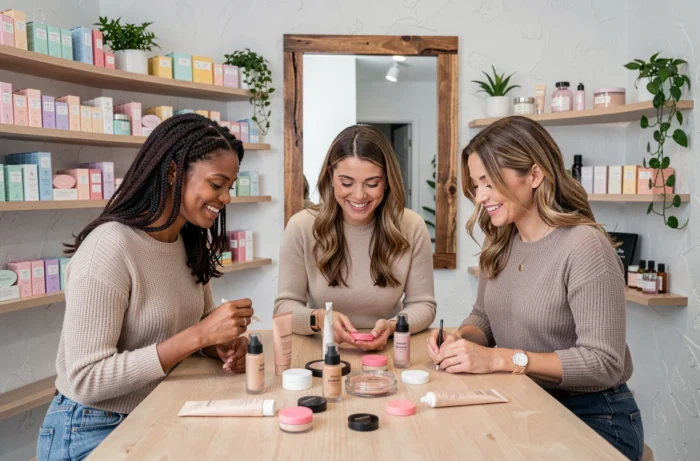
Skin barrier and skinimalism: proven skin care maturity
You may have noticed that some beauty trends disappear within a few months, while others settle in for the long term? Skinimalism, this approach that involves reducing the number of products to focus on a few effective treatments, falls into the latter category.
The reason is simple: skinimalism is based on a solid dermatological principle. Multiplying active ingredients in the same routine weakens the skin barrier, the lipid layer that protects the skin from external aggressions. A gentle cleanser, a suitable moisturizer, and sun protection cover the majority of daily needs.
The priority given to the skin barrier is reflected in vocabulary you increasingly encounter on packaging: ceramides, fatty acids, niacinamide. These ingredients are not new, but their role in formulas has changed. They are shifting from a complementary role to that of a main active ingredient.
What this changes in your facial routine
Specifically, a treatment that restores the skin barrier does not have a spectacular visible effect the next day. Its benefit is measured over several weeks: less tightness, less reactivity to temperature changes, a more even skin texture.
A good barrier treatment does not promise immediate radiance; it prevents damage. This logic of prevention rather than immediate correction requires a bit of patience, but it aligns with what dermatological research has recommended for years.
Expressive makeup: the return of color and bold textures
For several years, the so-called “clean girl” aesthetic has dominated social media: natural complexion, barely rosy lips, brushed brows. This trend has clearly been declining since the beginning of the year.
Research related to maximalist makeup is progressing on social media. We’re talking about saturated eyeshadows, layered creamy textures, looks that embrace an artistic dimension. This shift does not mean that discreet makeup is disappearing, but that it is no longer the only reference.
Why this change matters for product choice
More expressive makeup requires different formulas. Pigments need to be more concentrated, and textures more refined to hold without migrating. Here are the criteria to check when choosing a product in this range:
- Long-lasting wear without setting spray: a good creamy eyeshadow should not require an additional setting spray to stay in place for an entire day.
- Modulable intensity: the product should be able to layer without clumping, allowing for a transition from a light finish to a saturated effect.
- Compatibility with skincare: ensure that the formula does not contain ingredients that dry out the skin, especially if you apply a moisturizer underneath.
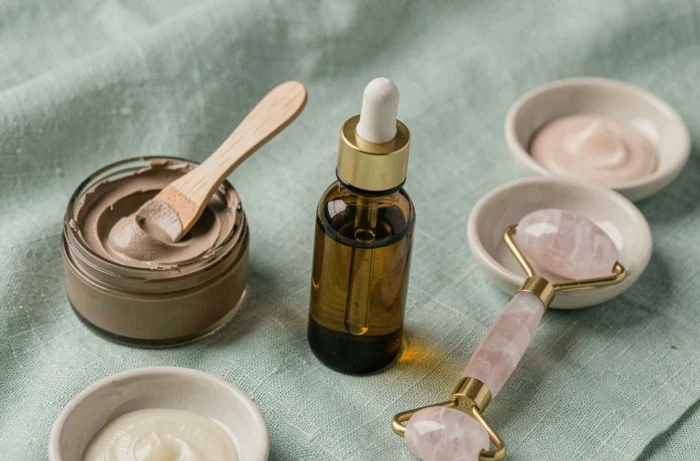
Peptides, postbiotics, LED: sorting active ingredients and technologies by their level of evidence
Not all ingredients highlighted by the industry have the same degree of scientific validation. This nuance is rarely explained in traditional beauty content, yet it changes the way to evaluate a product.
Peptides, for example, show promising results on firmness and fine lines. But the available studies often focus on very controlled conditions, with precise concentrations that do not always correspond to what a mass-market serum contains.
Postbiotics (compounds derived from probiotic fermentation) are presented as beneficial for the skin microbiome. Initial results are promising, but research remains in an intermediate phase.
At-home LED masks are experiencing strong commercial success. Their effectiveness depends on the wavelength used and the power of the device. A low-priced LED mask does not have the same capabilities as a professional device.
How to evaluate an active ingredient before adopting it
- Check if the manufacturer cites clinical studies conducted on the finished product, not just on the isolated active ingredient.
- Beware of vague terms like “laboratory tested” without mention of protocol or number of subjects.
- A promising active ingredient is not a proven active ingredient: distinguishing between the two avoids disappointments and unnecessary expenses.
Exosomes, often presented as the next revolution in skin care, illustrate this gap well. Their potential in cellular regeneration is real in fundamental research, but their cosmetic application remains largely hypothetical at this stage.
The most useful reflex in the face of the avalanche of new cosmetics and beauty care products is to cross-reference sources, read beyond the packaging, and prioritize active ingredients with established scientific maturity. Your skin does not need to follow every trend to be healthy.