The decoration trends of 2026 mark a clear shift from previous years. Cold minimalism is declining, large open spaces are being questioned, and the home is being rethought as a place that responds to specific uses: remote work, recovery, leisure. Rather than a catalog of decorating ideas categorized by room, this article examines the underlying movements that are reshaping interiors this year, their limits, and what they are concretely changing in layout.
Repartitioning the home: the end of the open concept in interior design
The large open-plan kitchen-living room, a reference in layout for the past fifteen years, is losing ground. Several trend analyses for 2026 document a questioning of the open plan in favor of more defined and partitioned rooms.
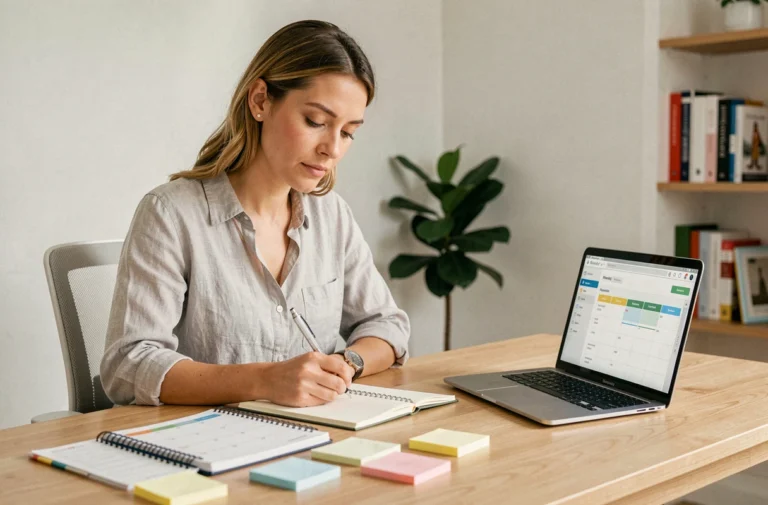
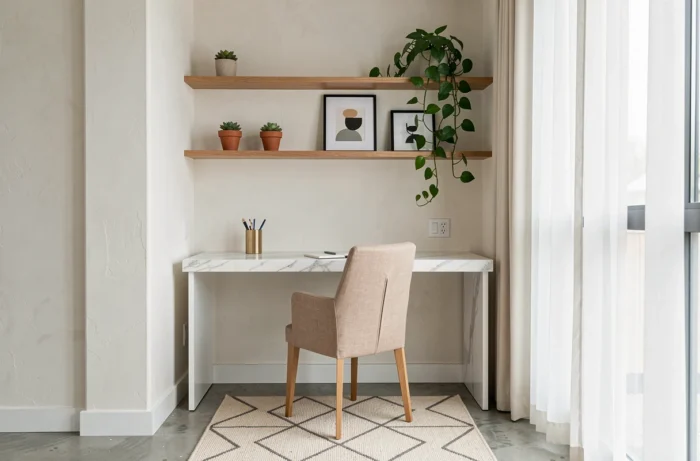
The reasons are primarily functional. Widespread remote work has made an acoustic problem visible: working in a shared space with the kitchen and living room generates nuisances that the open layout does not solve. Glass partitions, lightweight walls, separating bookshelves, and sliding panels allow for a form of intimacy without sacrificing light.
There is also a growing appreciation for closed rooms (dedicated office, guest room, TV room) that meet the hybrid uses of housing. This movement does not mean a return to the narrow hallways of the 1980s, but a search for balance between openness and partitioning. Exploring the home sections of Murmures Déco allows one to see how this trend translates into real interiors, with separation solutions adapted to each configuration.
Rooms dedicated to well-being: a space that becomes central in the home
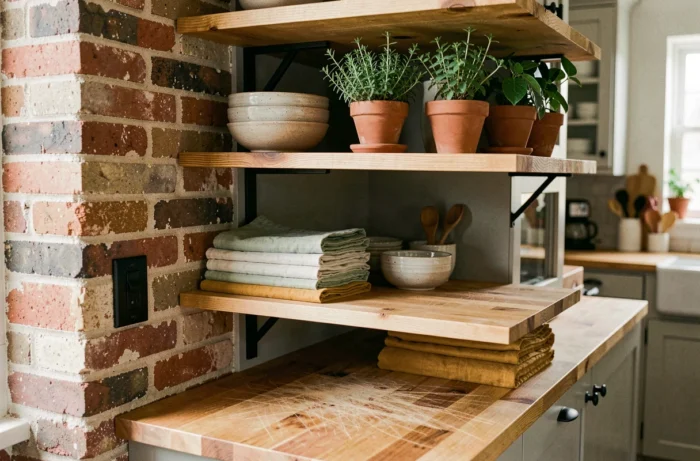
Designers are identifying a clear increase in spaces designed for well-being at home. Meditation corners, reading nooks, mini-yoga studios, bathrooms designed like spas (soft lighting, warm materials, rain showers, deep bathtubs, underfloor heating): these rooms are no longer a bonus but a central issue in 2026 decor, placed on the same level as the living room or kitchen.
This phenomenon extends the rise of mental health as a criterion for layout. The bathroom, long treated as a technical space, is concentrating the most visible decorative investments this year.
What this concretely changes in a decor project
Creating a well-being corner does not necessarily require an additional room. A corner of a bedroom, a landing, or a nook under the stairs can be repurposed. Field feedback varies on this point: some interior architects believe that a dedicated space, even small, has a real effect on daily life, while others feel that the effect remains mainly aesthetic in modest-sized homes.
Recurring elements in these layouts include:
- Indirect and adjustable lighting, often on a dimmer, to adapt the ambiance to the use (reading, relaxation, treatments)
- Warm-touch materials (wood, linen, wool) rather than cold surfaces, including in bathrooms
- Furniture reduced to the strict minimum to free up floor space and facilitate circulation
Invisible home automation: technology integrated into interior design
The integration of technology into decoration is changing its approach in 2026. Sources on interior design describe a home automation that is discreet but systematic. The goal is no longer to showcase technology but to make it disappear into furniture, walls, and coverings.
Concretely, this translates to recessed switches flush with surfaces, speakers integrated into furniture, lighting controlled by presence sensors, and USB outlets hidden in countertops. The guiding principle remains the same: technology serving comfort without compromising aesthetics.
The limits of this approach
Invisible home automation has a higher installation cost than visible solutions. It also requires anticipation from the design or renovation phase, as wiring and recesses are difficult to add afterward. For a decoration project without major work, the available data does not allow for a conclusion that invisible home automation represents a relevant investment compared to simply better-chosen traditional connected solutions.
Natural materials and warm colors: what replaces Scandinavian gray
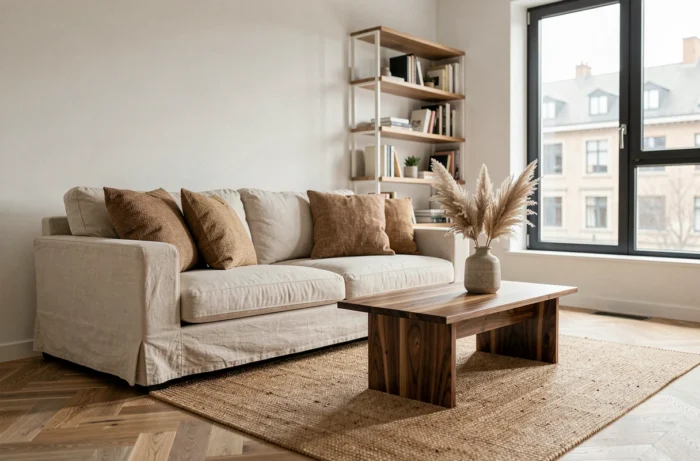
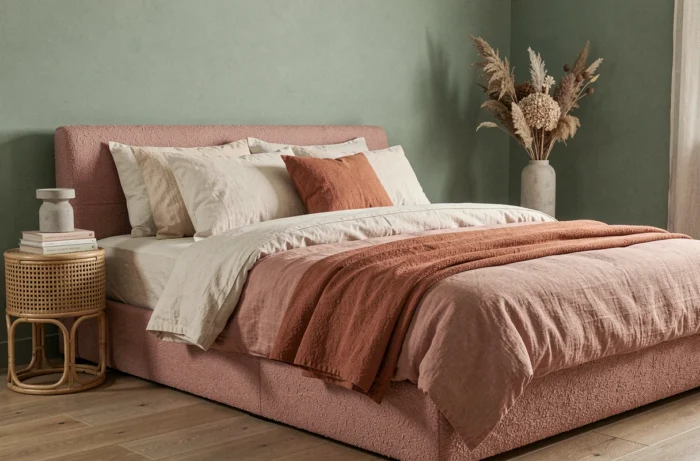
Light gray associated with blonde wood, the signature of Scandinavian style from 2015-2022, is giving way to a warmer palette. Terracotta, ochre, brown, and deep greens dominate this season’s selections. The Pantone color that marked 2025 (Mocha Mousse) has accelerated this shift towards enveloping tones set on neutral bases.
In terms of materials, dark wood is gradually replacing light oak. Amber glass appears in lighting and tableware to bring a filtered, retro light. Rattan, linen, and ceramics remain present, but in less smooth, more textured finishes.
- Deep blues and greens (sage, forest, petrol) are asserting themselves as alternatives to neutral tones in living spaces
- Purple and plum shades appear in contemporary atmospheres, often as accents on a wall or textile
- Brushed brass replaces shiny gold on handles, lighting fixtures, and bathroom accessories
The adoption of these trends in small touches (cushions, rugs, lighting, wallpaper on a single wall) remains the most common strategy to update an interior without engaging in heavy renovation.
The overall direction of home decor in 2026 points towards more segmented, tactile, and less demonstrative interiors. Intelligent partitioning, recovery spaces, and discreet technology form a coherent triptych, reflecting a relationship with housing that has become more demanding since the widespread adoption of hybrid work. It remains to be seen whether these orientations, currently driven by high-end and new projects, will spread into regular renovations at the same pace.