
Dialling a French number from abroad is straightforward, but differences in costs and formats between calling countries can lead to very different situations. The +33 country code is the gateway to every French number, whether landline or mobile. This guide looks at the practical differences based on the country you’re calling from and the type of line, as well as formatting pitfalls that can cause a call to fail before it even rings.
International exit codes by country: a comparison
+33 alone is not enough. Before dialling it, you need to use the international exit code for the country you’re calling from. This code can vary depending on whether you’re calling from a mobile or landline, as well as your location.
| Calling from | Exit code (landline) | Exit code (mobile) | Full number to call 01 42 68 53 00 |
|---|---|---|---|
| Belgium | 00 | 00 or + | 00 33 1 42 68 53 00 |
| Switzerland | 00 | 00 or + | 00 33 1 42 68 53 00 |
| United States / Canada | 011 | 011 or + | 011 33 1 42 68 53 00 |
| United Kingdom | 00 | 00 or + | 00 33 1 42 68 53 00 |
| Morocco | 00 | 00 or + | 00 33 1 42 68 53 00 |
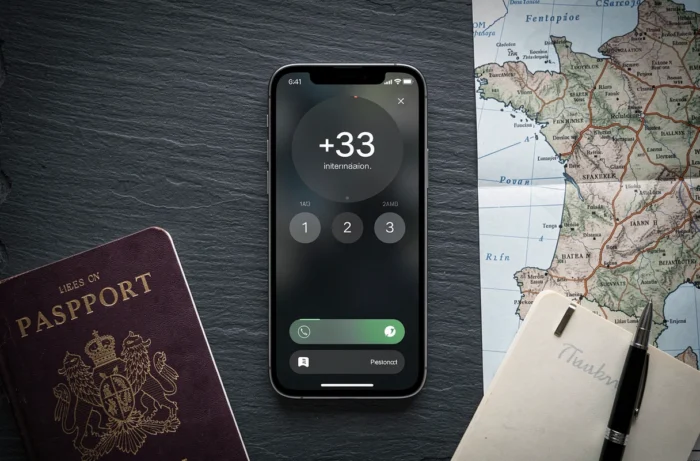
On a mobile phone, press and hold 0 to enter the + sign, which automatically replaces the country’s exit code. This works on any network and saves you from having to remember the local exit code.
To understand France’s telephone country code 33 and its role in the international numbering plan managed by the ITU, the same principle applies everywhere: dial the exit code, then 33, then the number without its initial 0.
E.164 format and removing the initial zero: where calls go wrong
The most common reason an international call to France fails is that the initial 0 has been retained. For domestic calls, 0 is the prefix used to access the network. In international format, it is omitted: never dial the initial 0 after +33.
So mobile number 06 12 34 56 78 becomes +33 6 12 34 56 78. Paris landline number 01 42 68 53 00 becomes +33 1 42 68 53 00. Dialling +33 06 12 34 56 78 (with the 0) will either result in an immediate rejection or connect you to the wrong person.
This format follows the E.164 standard, the international standard for structuring telephone numbers. VoIP systems, CRMs and messaging platforms use it as their reference format. An incorrectly formatted number in a business directory does more than cause a failed call: it can also lead to contact identification errors in tracking tools.
Special and short numbers
Short numbers (3000, 3114) and most premium-rate numbers (08) cannot be reached from abroad, even with +33. These numbers work exclusively on the French domestic network. Adding +33 8 or +33 3 before a short number will not work.
French area codes: does the digit after 33 still indicate a location?
Historically, the digit after +33 identified a geographical area in France:
- 01: Paris and Île-de-France
- 02: North-West (Brittany, Normandy, Pays de la Loire)
- 03: North-East (Alsace, Lorraine, Burgundy)
- 04: South-East and Corsica
- 05: South-West (Aquitaine, western Occitanie)
Since 2023, this geographical link has become less strict. A number beginning with 01 no longer necessarily indicates a location in Paris or Île-de-France. Arcep has made it possible to assign landline numbers regardless of the holder’s place of residence. For callers abroad, the area code is still useful for distinguishing a landline from a mobile (06 or 07), but it is no longer a reliable indicator of the other person’s location.
Mobile numbers begin with 06 or 07. From abroad, dial them in the same way: +33 6 or +33 7, followed by the remaining eight digits. The format itself makes no distinction in cost between calls to landlines and mobiles, but the operator in the country you’re calling from may apply different rates.
Receiving a call from a French number abroad: when +33 appears as hidden
A French caller travelling abroad keeps their usual number. Their call should appear normally on the recipient’s screen. In practice, several situations can cause the number to appear as hidden or incorrectly displayed.
When a traveller uses a local operator’s network while roaming, the call is routed through additional interconnections. Some intermediary operators do not transmit caller ID correctly. The French number may then appear to the recipient as “unknown number” or “private number”, even if the caller has not deliberately hidden it.
This is more common outside the EU/EEA. Within Europe, the “roam like at home” rules (extended until 2032) require operators to keep calling conditions close to those in the customer’s home country. Switzerland, although geographically in Europe, is not covered by these rules and may experience this type of issue.
Checking a suspicious call displayed as +33
In December 2025, Arcep adopted a decision aimed at combating number spoofing on outgoing calls. This measure strengthens the authentication of French numbers, but does not in itself guarantee that every call displayed as +33 is legitimate.
- A call from an unknown +33 number, especially one followed by a voicemail asking you to call back a premium-rate number, is a common scam pattern
- If you know the caller but their number appears as hidden while they’re abroad, you can call them back directly using their usual +33 number
- Encrypted messaging apps (Signal, WhatsApp) avoid these caller ID issues by using a data connection rather than the voice network
Cost of calling France: two situations not to confuse
Calling France from abroad using a foreign line and calling from abroad using a French line are two different pricing situations. The first is covered by the local operator’s international calling rates. The second is covered by roaming rates.
A French plan that includes European roaming lets you call France from an EU/EEA country at no extra cost, subject to fair-use limits. The same plan does not necessarily cover international calls made from France to a foreign number. Roaming and international calls are subject to separate rates.
Outside the EU, roaming charges vary considerably depending on the operator and destination. Checking the specific terms of your plan before travelling is the only reliable way to anticipate the cost.
The +33 format followed by the number without its 0 works everywhere, regardless of the type of line or the country you’re calling from. The most common mistakes—keeping the initial 0, dialling a short number from abroad, and confusing roaming with an international call—account for most failed calls and unexpected bills. Saving French contacts in your phone’s address book in +33 format prevents these problems from the outset.